The short answer is yes — and that’s exactly what sets The Apothecary Diaries apart from every other palace drama in the genre. Author Natsu Hyuuga doesn’t make up the disease or the cure: she researches the actual disease first, then goes and finds the documented historical treatment for that specific illness. Lead in cosmetics, arsenic as a political weapon, mercury against syphilis, methanol cut into cheap liquor — none of these are invented. Every single one is rooted in real historical records from imperial China, spanning the Tang and Ming dynasties.
This article breaks down the research method behind the show, the most striking cases it’s tackled so far, and what all of it reveals about the line — a lot blurrier than it seems — between medicine and poison.
How Natsu Hyuuga Researches Each Case
In an interview at Anime Boston 2026, the author herself walked through the creative process behind each of the show’s medical mysteries. According to her, it always works backward: first she picks the disease or condition she wants to portray, then she goes looking for whatever cure or treatment was historically used for that illness. A good chunk of that research happens online — but since the internet is packed with bad information, she’s made a point of saying that vetting and filtering trustworthy sources is a core part of the process, not some minor afterthought.
That reverse methodology — real disease first, then the real historical cure — is exactly what gives the show the level of accuracy so many viewers with a medical background keep praising it for. The theoretical foundation has real roots too: Kanpō, traditional Chinese medicine as adapted to the Japanese context, runs on principles similar to the pharmacological system described in classic texts like the Shennong Ben Cao Jing, one of the earliest major compendiums of medicinal knowledge in Chinese history.
Worth underlining: this accuracy is a deliberate choice from the author, not a happy accident of the script. She builds the show as historical fiction anchored in real medicine — which is exactly why the cases are so varied, each one demanding its own dedicated research.
Case 1: The White Powder That Wiped Out Entire Families
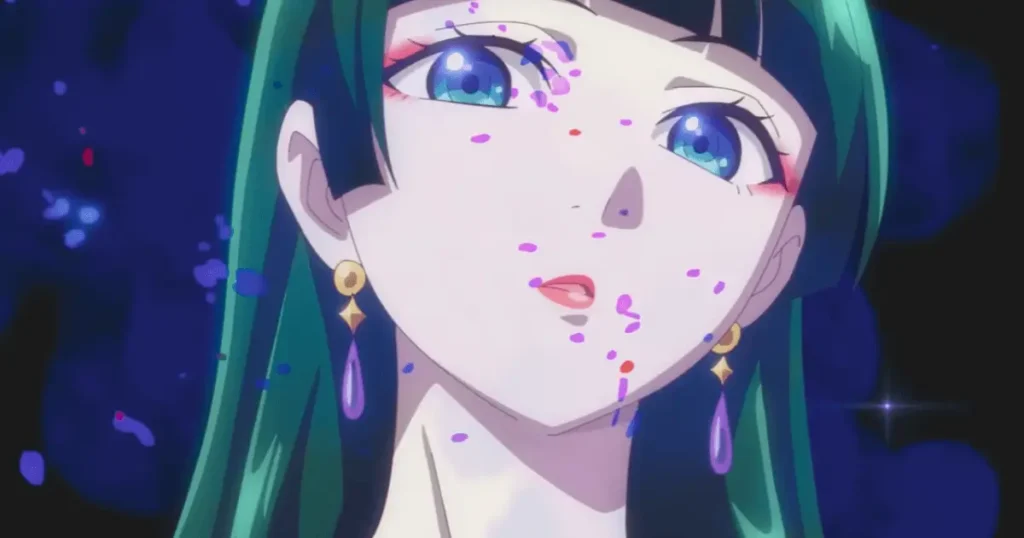
In the story, two palace consorts lose their own children shortly after birth, and it’s Maomao who identifies the cause: the white lead powder (ceruse) the mothers were applying to their faces to achieve the pale complexion valued at the time.
This detail has solid historical grounding. Ceruse was a common cosmetic among courtesans and nobility across multiple cultures — China, Europe, and Japan included — and chronic lead poisoning has historically been linked to reproductive loss, cognitive decline, and death. Babies are especially vulnerable: lead absorbed by the mother passes through breast milk, causing acute toxicity in the newborn.
One detail that really reinforces how rigorous the show is: after the case gets solved, the emperor himself bans lead from the palace — a direct nod to sanitary reforms that actually happened in imperial China across different periods.
Case 2: The Political Poison That Mimicked a Natural Illness
Maomao detects arsenic through one specific tell: a faintly metallic taste in the food. It’s a historically accurate detail — arsenic trioxide, popularly known as “white powder” across various cultures, is nearly tasteless in low doses, but produces chronic symptoms (fatigue, hair loss, progressive nerve damage) that are easy to mistake for a natural illness — which is exactly what made it such an effective political weapon: it killed slowly, without raising immediate suspicion.
Real poison tasters, historically, developed sensitivity to subtle signs just like this one — a metallic taste, slight numbness in the lips, a burning feeling in the throat. Maomao, raised and trained in the red-light district, carries exactly that kind of practical knowledge — and the historical practice of food tasters serving emperors (frequently women) is also well documented.
Case 3: The Disease Medicine at the Time Couldn’t Cure
A consort develops severe symptoms — lesions, fever, mental decline — and Maomao recognizes it as advanced venereal disease. The available treatment is mercury, and her line about the remedy “fighting to help” the patient is technically accurate: mercury slowed the progression of syphilis, but it never cured it.
Historically, this is one of the darkest chapters in pre-modern medicine. Before penicillin was discovered in 1928, syphilis was, in practice, a slow death sentence — and the only available treatment, mercury, came with serious side effects of its own (tremors, tooth loss, kidney damage), all without ever reversing the neurological damage the disease had already caused by an advanced stage. The show doesn’t soften this reality: even treated, the consort doesn’t survive — an honest reflection of an era with no real medical answer for this kind of infection.
Case 4: The Cheap Liquor That Caused Blindness
An official dies after drinking, showing symptoms of vomiting followed by blindness. Maomao’s investigation reveals the alcohol he drank wasn’t regular ethanol — it was methanol, so-called “wood alcohol,” used to cut costs on cheap liquor.
This kind of adulteration has broad historical documentation, not just in imperial China but across different periods and countries — including well-documented cases in the United States in the early 20th century. Methanol is significantly more toxic than regular alcohol: even a small amount is enough to cause blindness, organ failure, and death, since the body metabolizes it into byproducts that are even more harmful.
Case 5: The Pigment That Silently Poisoned Artists
A court artist uses a vibrant yellow pigment — orpiment, technically an arsenic sulfide — and develops symptoms of chronic poisoning: fatigue, skin lesions, and nerve damage over time.
Once again, this case has real historical grounding: orpiment was a widely used pigment among painters and craftsmen across multiple cultures, and progressive poisoning among these workers is well documented — many of them never knew the material they handled every day carried that risk.
The Pattern That Connects Every Case
Running underneath every one of these episodes is the same theme, showing up in different forms each time: the line between medicine and poison has historically always been thinner than people assume. Arsenic was a political poison, but it also went into medicinal preparations of the time. Mercury killed slowly, but it was the only available option against a disease that was even worse. Orpiment decorated and poisoned at the same time.
That’s, at its core, the quiet argument the show builds case after case: what determines whether a substance heals or kills is almost never the substance itself — it’s the dose, the context, and whether or not someone has the knowledge to spot the difference in time. Within that logic, Maomao functions as a bridge between worlds the society of the time treated as completely separate: medicine, art, politics, and everyday survival.
Why This Accuracy Matters
The Apothecary Diaries isn’t just a mystery drama set in a fictional court — it’s a show that uses real medical history as the backbone of every arc. Every case Maomao solves carries genuine research behind it, not invention built purely for suspense. It’s this commitment to historical accuracy that explains why the show gets so much praise from people with a background in medicine, pharmacy, or the history of science — and it’s also what turns every new mystery into something genuinely rare for the genre: fiction that actually teaches real history, without ever losing sight of being, first and foremost, a great story.