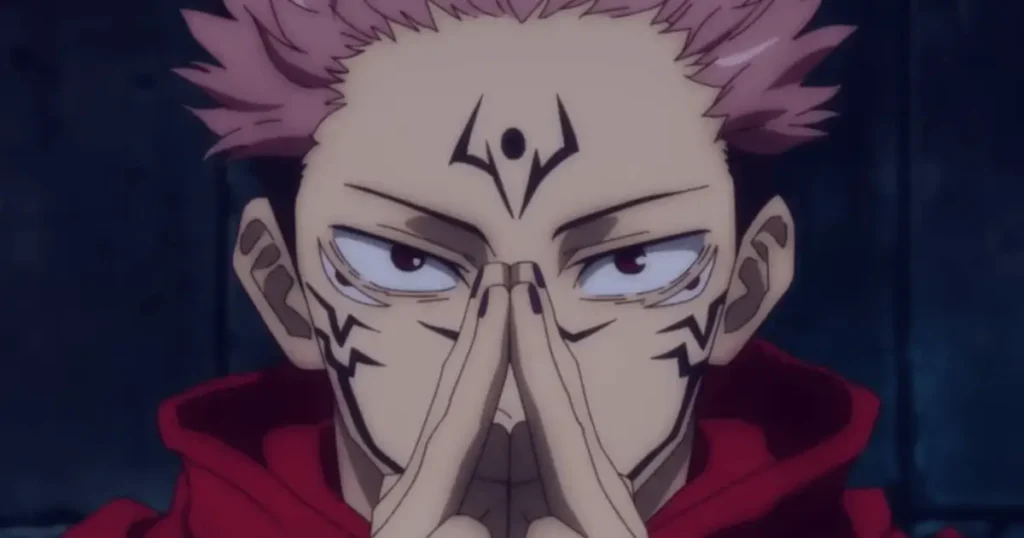
Twelve hundred years before Yuji Itadori pops that rotting finger into his mouth with zero clue what he’s about to unleash, a two-faced figure was already floating around Japan’s historical record, splitting opinion on whether he was monster or protector. That’s not a coincidence at all: Ryomen Sukuna, the villain who turns Jujutsu Kaisen into a nightmare within its first few chapters, was built on a deliberate blend of ancient mythology and one of the most unsettling origin stories ever written for a modern shonen.
It’s common to see anime-only viewers treat Sukuna like just another curse born from collective human fear, the same mold as Mahito or Jogo. That reading makes sense on the surface — after all, he spends most of the story as a parasite living inside someone else’s body. But it skips over something essential: Sukuna used to be a person. And understanding exactly what kind of person he was is what pushes this villain from “scary” into “genuinely disturbing.”
Before He Was a Legend, Sukuna Was Flesh and Blood
Let’s clear this up first: Sukuna was born human. He lived, breathed, and fought as a sorcerer over a thousand years ago, during the Heian era — the period Jujutsu Kaisen’s own mythology treats as the absolute peak of jujutsu, a time when the average power level blew past anything seen in the series’ modern day.
And even among special-grade sorcerers in an already brutal era, Sukuna stood alone. No clan needed. No army needed. No allies needed. He just had to show up, and other top-tier sorcerers got wiped out one by one. That solo track record of destruction, built while he was still alive, is exactly where his lasting nickname comes from. King of Curses isn’t a symbolic title — it’s a biography in two words.
The shift from “dangerous man” to “nearly indestructible legend” happens after his physical death. Aware — or planning ahead — that his body could never be fully destroyed, Sukuna splits his soul and cursed energy into twenty physical fragments: the twenty fingers scattered across Japan that drive the entire plot of Jujutsu Kaisen. Each fragment carries a piece of his original power, and together they form what’s essentially a resurrection plan planted strategically across the country, just waiting for someone to stumble onto the pieces.
The Gross Secret Behind the Four Arms
Anyone who sees Sukuna’s true form — four arms, two faces — naturally assumes they’re looking at some kind of generic supernatural mutation and leaves it at that. The real explanation is far more uncomfortable: Sukuna was born a twin, and while still in the womb, he devoured his own brother to guarantee his own survival, absorbing in that single instant all the cursed energy that would otherwise have been split between two separate bodies.
That detail completely changes how you read his anatomy. Every extra arm, every extra face, is literally a leftover piece of a second life that never got the chance to exist on its own. And it might explain the total absence of empathy that defines Sukuna better than any villain monologue could — he never had to share a single thing with anyone, not even during the most fragile, dependent moment any human being goes through.
There’s an interesting parallel between that “preserve power through extreme bodily sacrifice” logic and a real, documented practice from Japanese history: Sokushinbutsu, the Buddhist ritual in which monks self-mummified while still alive, through years of extreme fasting and brutal discipline, in an attempt to reach a higher spiritual state after death. There’s no statement confirming Akutami drew direct inspiration from that specific ritual when designing Sukuna’s transformation into cursed objects — so treat this as interpretation, not established fact. Even so, the parallel is worth sitting with: both cases revolve around giving up the conventional body to cross centuries. The difference is the purpose. Where Sokushinbutsu seeks genuine spiritual transcendence, aimed at something bigger than the monk himself, Sukuna uses that exact same logic of bodily sacrifice toward the opposite end: pure, absolute selfishness, with no goal beyond guaranteeing his own return.
The Legend That Existed Before the Manga
Here’s the detail that separates Sukuna’s origin from any other villain cooked up from scratch by a mangaka: Ryomen Sukuna isn’t Akutami’s invention. He shows up in the Nihon Shoki, one of the oldest chronicles ever written about Japanese history, dating back to the 8th century. In the Hida region, local folklore was already describing, centuries before a single page of Jujutsu Kaisen existed, a two-faced, four-armed figure powerful enough to directly defy the emperor’s own authority.
What turns that historical legend into perfect material for a complex villain is the split opinion that’s always surrounded it. To the imperial court, Sukuna was recorded as a demon, a threat to be wiped out in the name of established order. To the people of Hida, far from the center of power, the surviving memory is nearly the opposite: there, he lives on as a protector, a figure tied to local temples and credited with some kind of real benefit to the community.
That clash between “monster, according to whoever holds the power” and “hero, according to whoever lives on the margins of that same power” is precisely the tension Akutami carries into the series. One thing worth being clear about: none of this makes Sukuna, the character, redeemable at any point — he remains one of the cruelest villains the genre has ever put to page. But the mythology lending him his name was already carrying that exact same argument over who that two-faced figure really was, twelve hundred years before the manga’s first page.
Dying on His Own Terms
If there’s a thread connecting the historical Sukuna to the one in the series, it’s the flat refusal to apologize for anything. His arc within Jujutsu Kaisen ends exactly the way it began a thousand years earlier: no redemption sought, no justification offered for his own cruelty, no last-minute show of remorse staged just to soften the exit. Even in defeat, Sukuna dies loyal to the same logic that guided his very first choice, back in the womb — survive and win by rules that belong to him alone, answerable to absolutely no one.
That relentless consistency, more than any last-minute plot twist, is what makes Sukuna’s origin one of the best-constructed character studies in modern shonen: a villain born from an extreme act of survival, who spends a thousand years growing into a legend split between monster and protector, and ends exactly as he began — whole, intact, and apologizing to no one.
Did you already know the story of the twin brother before reading this, or was the real folklore legend behind Ryomen Sukuna news to you? Drop your take on this character in the comments.