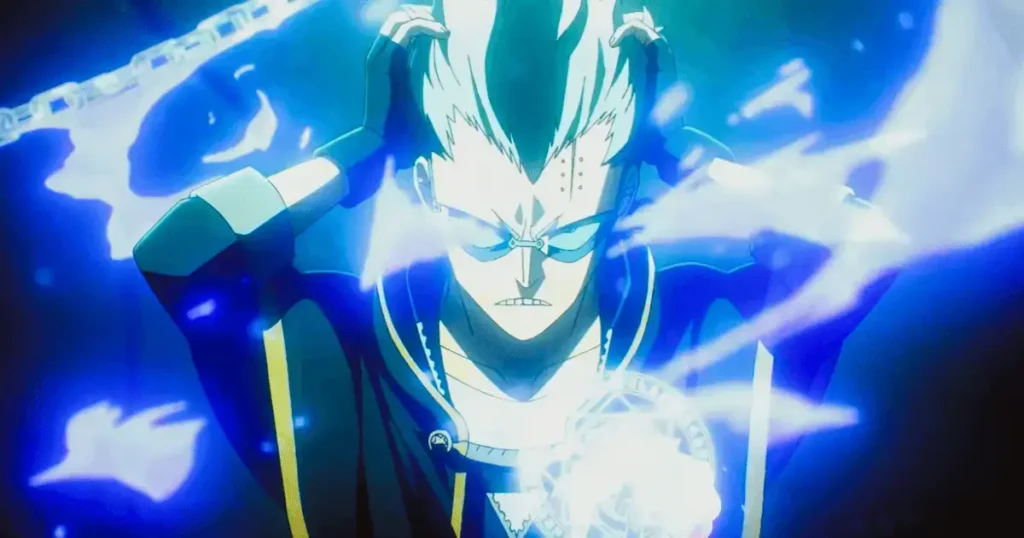
There’s something about Magna Swing’s fight against Dante Zogratis that makes it stand out in Black Clover: for the first time, someone who was vastly outmatched in magical power managed to force Dante into a kind of battle he wasn’t used to fighting.
And it wasn’t because Magna unlocked a secret transformation or received some ridiculous power-up at the last minute. He took a completely different approach: he spent six months preparing a technique designed to target his opponent’s greatest advantage.
The battle quickly became one of the anime’s standout moments, featured in Episode 175, “The Highest vs. “the Lowest,” which aired on Crunchyroll on October 31, 2026. On one side was Dante, a member of the Dark Triad and host of Lucifero. On the other was Magna, one of the Black Bulls who rarely received the same spotlight as teammates like Asta, Yami, and Luck.
I have to admit, I love how this fight was put together. Instead of turning Magna into someone with an enormous mana reserve, the story takes what had always been his biggest weakness and makes it the starting point of his strategy. He didn’t need to become a completely different character to win. He just needed to figure out how to make his existing abilities work against someone far stronger.
That’s where Soul Chain Deathmatch comes in, one of the most fascinating spells in Black Clover. But how does it actually work? Why couldn’t Dante escape the situation? And what made Magna’s victory so important for the Black Bulls?
Let’s break down the entire battle, from those six months of preparation to the final blow that brought Dante down.
Warning: This article contains spoilers from the Black Clover manga, particularly Chapters 291, 292, and 293.
Who Is Magna Swing, and Why Did So Many Fans Underestimate Him?
Magna Swing was never introduced as one of the Black Bulls with the greatest natural magical power. While some of his teammates possess extraordinary abilities or impressive mana reserves, Magna has always had to make the most of considerably fewer resources.
His specialty is Fire Magic, which he uses to launch offensive attacks and take on opponents head-on. Magna also has an aggressive fighting style. He’s the kind of fighter who would rather face danger directly than sit back and wait for the perfect opportunity.
But there’s a big difference between being a capable fighter and having an enormous amount of magical power. Magna is skilled, experienced, and brave, but he doesn’t have the same reserves as members of noble families or powerful enemies like Dante.
That helps explain why he began falling behind as the Magic Knights faced increasingly dangerous threats. It wasn’t that he lacked the will to fight. The problem was that determination alone wasn’t enough when he came up against opponents with vastly superior magical power.
And here’s one of the character’s best qualities: Magna isn’t exactly the type to sit around watching everyone else grow stronger while he remains stuck in the same place.
What Makes Magna’s Magic Different?
Magna’s Fire Magic isn’t presented as one of the most powerful abilities in the Black Clover universe. He doesn’t have the same destructive potential as certain other characters, but he knows how to use his spells offensively and relies on his toughness to keep the pressure on his opponents.
His real strength, however, isn’t about launching the biggest fireball in the middle of a battle. It’s his ability to come up with creative ways to use the magic he already has.
We see that side of him much more clearly during his fight against Dante. Magna realizes that there’s no point trying to win a conventional contest of magical power. As long as he follows the same rules as his opponent, the outcome will probably be the same: Dante will dominate the fight.
So, instead of sticking with a strategy that was never going to work, he decides to change the conditions of the battle.
Dante Zogratis: Why Was Fighting Him Almost Impossible?
To understand just how impressive Magna’s achievement was, we need to remember who was standing on the other side of that chain.
Dante Zogratis is one of the leaders of the Dark Triad, the group that rules the Spade Kingdom. His power comes from combining his own magical abilities with the strength of Lucifero, one of the most powerful devils introduced in the story.
The problem is that Dante doesn’t rely on just one technique to win. He can control the battlefield, attack in different ways, and recover from injuries that would be enough to end a fight against many other opponents.
Dante Zogratis’ Powers: Gravity Magic
Gravity Magic allows Dante to manipulate gravitational forces, putting tremendous pressure on his opponents, restricting their movements, and creating extremely dangerous attacks.
With Lucifero’s power behind it, this ability becomes even more terrifying. You can’t simply rush toward Dante and try to land a hit. The battlefield itself can become a disadvantage for anyone facing him.
That’s especially troublesome for someone like Magna, who relies on getting close to his opponents and using direct attacks to put them under pressure.
Body Magic Makes Dante Even Harder to Defeat
As if Gravity Magic weren’t enough, Dante also possesses Body Magic. This ability allows him to manipulate his own body and recover from injuries.
That’s why landing a powerful blow isn’t necessarily a major problem for him. Dante can regenerate the damage he takes and keep fighting even after receiving attacks that would seriously hurt most opponents.
In practical terms, Magna was facing someone with more magical power, far greater offensive capabilities, and a recovery ability that made the fight even more difficult.
Calling a conventional battle extremely unfavorable for the Black Bull wouldn’t be an exaggeration. Dante simply had too many advantages.
Six Months of Training: How Did Magna and Zora Prepare the Trap?
Magna’s preparation didn’t begin when he came face-to-face with Dante on the battlefield. It was the result of roughly six months of training, during which he had to find a way around a limitation that couldn’t be solved simply by increasing his mana reserves.
One approach that didn’t work for him was following the training methods used in the Heart Kingdom. Magna couldn’t use the Mana Method in the way he needed to achieve the kind of progress he was looking for.
And that’s where Zora Ideale comes in.
Why Did Magna Ask Zora for Help?
Zora was an interesting choice because he had specialized knowledge of rune arrays and trap magic. He knew how to create complex magical effects by combining inscriptions and runes.
Magna didn’t need someone to teach him how to launch stronger fire attacks. He needed to learn how to approach his own magic from a completely different angle.
There was also a personal reason behind the training. Magna was tired of falling behind while teammates like Luck continued to improve. The events surrounding Yami’s kidnapping had also left a mark on him: neither he nor Zora had been able to stop their captain from being taken away.
For someone as proud as Magna, that was a difficult thing to accept. He didn’t want to remain the teammate who had to rely on others whenever his friends were in danger.
So his decision to seek Zora’s help wasn’t simply about becoming stronger. It was also an attempt to overcome the growing feeling of helplessness that had been bothering him.
How Did Rune Arrays Help Magna Create a New Spell?
With Zora’s guidance, Magna learned how to work with rune arrays and organize magical effects in much more complex ways.
The result was a technique designed to directly target the difference in magical power between two opponents. Rather than trying to overpower Dante, Magna developed a set of conditions that would make that difference far less decisive.
It’s a solution that fits his character perfectly. He had no way of competing with the mana reserves of a devil host, but he found another way forward through knowledge, preparation, and creativity.
And honestly, I’d much rather see Magna build a strategy around the abilities he already has than receive a sudden power-up with no real preparation behind it.
Soul Chain Deathmatch: How Does Magna’s Secret Spell Work?
Soul Chain Deathmatch is a secret Fire Magic spell developed by Magna using the knowledge he gained during his training with Zora.
Its mechanics are quite different from those of an ordinary elemental spell. Magna uses a complex rune array prepared on his own body and activates the technique by striking his opponent with a fireball.
Once the attack connects with Dante, a magical chain links the two fighters. This connection binds their souls and establishes a very specific rule: their total magical power is divided equally between them.
Think about the difference between the two before the spell was activated. Dante had an enormous amount of magical power, while Magna had to make do with considerably fewer resources.
With Soul Chain Deathmatch, that imbalance no longer works the same way. Both fighters end up with an equal share of the magical power involved in the battle.
But there’s an important detail here: Magna doesn’t steal Dante’s abilities, automatically gain Lucifero’s powers, or suddenly become an expert in Gravity Magic or Body Magic. The spell changes how magical power is distributed; it doesn’t turn one fighter into the other.
Why Can’t Dante Simply Break the Chain?
Here’s one of the most interesting aspects of Soul Chain Deathmatch.
The chain isn’t just some ordinary link that can be ripped away through brute force. Magna explains that it connects the souls of both fighters and gives Dante a warning: anyone who tries to remove or break it by force risks losing their sanity.
In other words, Dante can’t simply use his strength to force his way out of the connection.
The situation also requires everyone nearby to be careful. Zora warns Jack not to interfere with the fight because outside intervention could compromise the technique. Magna’s strategy was designed to put both fighters in a direct one-on-one battle, and any interference could change the conditions he had carefully prepared.
What Are the Limitations of Soul Chain Deathmatch?
Despite being an impressive technique, Soul Chain Deathmatch is far from a spell that makes Magna invincible.
The first limitation is that Magna himself describes it as a one-time-use spell. It took six months of preparation to develop a technique that could make use of his particular abilities and create that connection between two fighters.
On top of that, dividing magical power doesn’t cancel out every ability an opponent possesses. Dante still has his combat experience, knowledge, and own techniques. He can also attempt to use Body Magic to recover from the damage he takes.
There’s another problem that eventually becomes crucial for both fighters: energy consumption. The technique doesn’t create an endless supply of power. As the two continue using their abilities, the amount of magical power available to them gradually decreases.
And that’s exactly what puts Dante in a situation he never expected to face.
How Did Magna Defeat Dante Despite Being So Much Weaker?
Once the chain is activated, the fight is no longer the one-sided battle we saw before. Magna can pressure Dante in ways that previously seemed impossible, while the Dark Triad member has to deal with an opponent who now has access to an equal share of magical power.
But there’s something that makes this fight much more interesting than a simple showcase of Magna’s new spell: Dante doesn’t go down immediately.
He keeps fighting, takes several hits, and tries to use Body Magic to recover from the damage. That’s important because it shows that Soul Chain Deathmatch doesn’t turn the battle into an automatic victory. Magna still has to overcome an experienced and incredibly dangerous opponent.
Dante’s Regeneration Starts to Take Its Toll
Dante was used to using his powers while enjoying an enormous mana advantage. Before facing Magna, he could overwhelm his opponents and recover from injuries without having to deal with the same limitations as an ordinary mage.
Now, things have changed.
Every use of magic consumes some of the available power, and Dante has to spend energy to keep attacking and regenerate his own body. Meanwhile, Magna continues putting pressure on him, never giving his opponent the comfort of simply waiting for the battle to end.
The Black Bull also takes damage and begins to feel the exhaustion. The difference is that he knew from the beginning that this wouldn’t be an easy fight. His entire strategy depended on pushing Dante to his limits.
What Happens When Dante Runs Out of Magical Power?
As the fight progresses, both fighters reach a critical point. Dante can no longer use his magical abilities as freely as before and loses the ability to maintain his devil-powered form.
That’s a huge problem for someone who relied so heavily on his abilities to dominate his opponents.
Magna is exhausted too. There’s no miraculous transformation waiting for him at the last second. Both fighters have reached their limits, but Magna managed to create the right conditions to give himself a much better chance than he would have had in a conventional fight.
When the battle turns into a physical confrontation, Magna’s determination and endurance make all the difference. He keeps fighting, while Dante can no longer maintain the same air of superiority.
In the end, Magna is the one left standing, while Dante is knocked unconscious. The manga officially confirms his victory in Chapter 293.
What I like most about this ending is that Magna never had to beat Dante at the very thing his enemy was best at. He found a way to create a battle where the advantage that made Dante so terrifying was no longer enough.
Was Zora Just as Important as Magna in This Victory?
Not quite. The victory belongs to Magna, and it’s important to make that clear. Still, it would be unfair to overlook Zora’s role in developing the technique.
Zora helped turn an idea into something that could actually work in a real battle. His knowledge of rune arrays was essential to Magna’s development of Soul Chain Deathmatch.
What’s interesting is that the two don’t share the same fighting style. Zora relies on traps and preparation, while Magna is much more direct and aggressive. Even so, they managed to combine their knowledge in a way neither of them could have achieved alone in that situation.
This partnership also says a lot about the Black Bulls. The squad was never made up exclusively of mages with extraordinary abilities. Its members have very different strengths, and sometimes that diversity is exactly what allows them to find unexpected solutions.
Zora didn’t defeat Dante on Magna’s behalf, but he helped create the tool that gave his teammate a genuine chance to win.
What Does This Fight Reveal About Magna Swing’s True Strength?
The battle against Dante changes the way we look at Magna, but not because he suddenly gained an absurd amount of magical power.
What changes is our understanding of what he’s capable of.
For a long time, he was a character who had to deal with limitations that other Black Bulls didn’t face in quite the same way. Luck, for example, has a natural talent for combat and speed. Asta built his growth around Anti-Magic. Magna, on the other hand, had to find a solution that combined knowledge and strategy.
His victory proves that he didn’t need to compete with the others on their terms.
Is Magna One of the Most Underrated Characters in Black Clover?
In my opinion, this battle is one of the strongest arguments for why Magna deserves more recognition than he usually gets.
I’m not saying he automatically became stronger than Luck, Asta, or the other Black Bulls. That would be an exaggeration based on a fight with such specific conditions.
But Magna demonstrated something that goes beyond learning a new spell: he was able to recognize a disadvantage, study a possible solution, and remain disciplined enough to work toward it for months.
That’s also what makes his victory so satisfying. His new power didn’t come out of nowhere just because the story needed a way to end the fight. We saw the preparation, Zora played a part in its development, and the technique has specific rules that directly affect the outcome.
Magna won because he understood that he didn’t need to play Dante’s game. He needed to change the rules.
And that’s one of the best ideas Black Clover has ever used in a fight.
Conclusion: Did Magna Prove He Deserves More Recognition Among the Black Bulls?
Magna Swing’s victory over Dante Zogratis is memorable because it doesn’t rely on an unexpected transformation or some hidden reserve of mana. Instead, it grows out of a limitation that had followed the character for much of the story and his decision to find a different way to overcome it.
With Soul Chain Deathmatch, Magna managed to divide the magical power between himself and Dante, taking away the advantage that had made the fight so incredibly one-sided. But the technique only worked because of the preparation, knowledge, and endurance required to make the most of that opportunity.
We also can’t forget Zora, whose guidance was essential in turning the strategy into a functional spell. Their partnership gives the outcome even more meaning.
For me, this fight is special because Magna didn’t have to stop being Magna to win. He was still that impulsive member of the Black Bulls, but he found a much smarter way to take on an enemy who seemed completely out of his league.
Now I want to hear your take: Do you think Magna Swing is one of the most underrated characters in Black Clover? And could Soul Chain Deathmatch put another member of the Dark Triad in the same kind of situation as Dante?
Featured image: Copyright © Yūki Tabata / Shueisha / TV Tokyo / Black Clover Project.