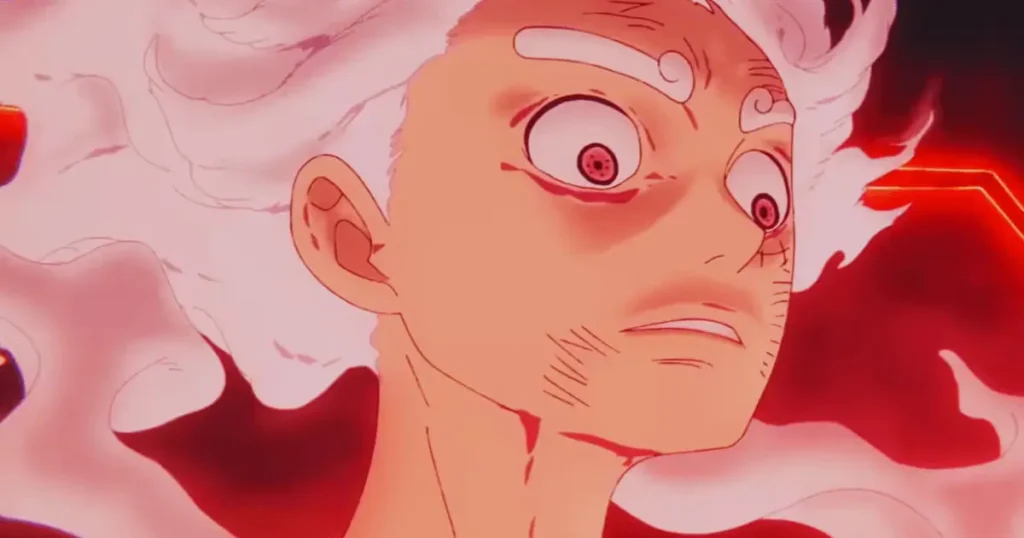
Haki is the most important power system in One Piece — a spiritual energy born from willpower that makes superhuman feats possible, gets around Devil Fruit defenses, and, according to the story itself, decides who can truly “conquer the sea.” Unlike Devil Fruits, which usually come from a chance encounter, Haki is awakened through training, emotional shock, or natural talent — and it only truly blossoms once it’s tested against stronger opponents.
This guide pulls together what’s officially confirmed by the manga, anime, and supplementary material, and separates that from what’s still community theory — a distinction most guides out there don’t bother making, and one that changes a lot about how you should read each piece of information.
What Is Haki? Definition and Origin
Haki (覇気, “Hegemonic Spirit” or “Will to Conquer”) is a spiritual energy that, according to the story, every living being carries in a latent form — but the vast majority never manage to awaken. It shows up in three categories:
- Observation — sensing presences, emotions, and intentions
- Armament — creating a kind of spiritual armor, both offensive and defensive
- Conqueror’s — overpowering the will of others
That last one is so rare that the story estimates it’s found in roughly 1 in several million people.
The term first showed up way back in Jaya, when Blackbeard commented that Luffy’s bounty didn’t come from luck, but from his own “Haki” — a use of the word with zero explanation at the time. The concept got its visual introduction in Sabaody and Amazon Lily, with Sentomaru using an advanced form of Armament from a distance and the Kuja warriors hardening their arrows with Haki. But the systematic explanation didn’t really arrive until Luffy’s training with Rayleigh on Rusukaina, where he breaks down all three types and demonstrates each one on a giant elephant without any physical contact.
Inside the story itself, Kaido even declares that Haki is the true deciding factor in whether someone can conquer the sea — unlike Devil Fruits, Haki “transcends everything.” The example fans cite most to back that line up is Gol D. Roger: with no Devil Fruit at all, he conquered the Grand Line using nothing but Haki, a feat Big Mom, Kaido, and Shiki couldn’t replicate decades later even with Fruit powers.
The Three Types of Haki
Observation Haki (Kenbunshoku Haki)
Observation Haki grants a kind of sixth sense: the ability to sense other people’s presences, strength, and emotions, even from outside your line of sight. At its most advanced level, it becomes almost precognitive, letting the user sense intentions and predict attacks before they happen.
At a basic level, that means sensing nearby presences, like Luffy did when he picked up on enemies on Fish-Man Island. At an advanced level, it lets you predict movements in combat — that’s how Luffy managed to dodge Doflamingo’s attacks. At the highest level shown in the story so far, Observation becomes capable of seeing the future a few seconds ahead, as demonstrated by Katakuri during the fight on Whole Cake Island.
Worth pointing out that this type of Haki had already appeared before it was formally named: the “Mantra” used by Enel’s priests in Skypiea is essentially Observation under a different name, and Aisa, a native of the island, was born with the ability already awake, with no training at all. Usopp, meanwhile, awakened his own Observation in a moment of intense emotional shock — the fear of losing his friends while shooting at Sugar.
Observation Haki also has clear limits inside the story: it’s not omniscience, and a skilled user can hide their own presence from anyone trying to sense them. Extreme emotions, like rage or panic, also throw off the accuracy of the prediction.
Armament Haki (Busoshoku Haki)
Armament Haki lets you turn your own willpower into a kind of invisible armor, used for both defense and offense. It’s this type of Haki that gets around the defenses of Logia Fruits, including their signature intangibility.
At the basic level, the user simply hardens part of their body or a weapon — visually represented, since the timeskip, by a signature black sheen. At the advanced level, called emission, it’s possible to project that Haki at a distance, hitting the target without direct physical contact — that’s how Sentomaru knocked Luffy down in Sabaody, leading the Straw Hats to believe for a moment that he had a Devil Fruit.
The relationship between Armament and Logia Fruits is one of the most misunderstood points among fans, so it’s worth going with the official explanation from Rayleigh himself: Haki doesn’t cancel out the Fruit, it just forces the Logia user’s body to temporarily solidify, letting you strike the real body behind the intangible form. That’s exactly what Rayleigh demonstrated when he touched Kizaru’s body of light. Against Paramecia and Zoan users, on the other hand, Armament Haki doesn’t get around the physical modifications of the Fruit itself — which is why Luffy couldn’t simply strike certain altered forms of Paramecia-Fruit opponents using basic Armament alone.
Among the most notable users is Luffy himself, who can apply Armament across his entire body during Gear 4, and Zoro, whose mastery of the technique lets him cut through opponents who are also using defensive Armament — in these clashes, the difference always comes down to each user’s level of refinement.
Conqueror’s Haki (Haoshoku Haki)
Conqueror’s Haki is the rarest of the three: it lets you impose your own will on other people, dominating weaker minds — stronger users can resist the effect. Unlike the other two types, it can’t be learned through training: it can only be awakened.
Its first use in the story, with no formal explanation at all, was by Shanks, in the very first chapter, when he scared off the Sea King that had bitten off his arm. The name “Haoshoku” only showed up much later, in Amazon Lily, when Luffy accidentally knocked out an entire crowd.
Katakuri, one of Big Mom’s sons and one of the Three Sweet Commanders, is a confirmed user — he knocked out Flampe and his men with this ability during the fight against Luffy on Whole Cake Island. Yamato, Kaido’s child, is also confirmed as a user. The list of confirmed users in the story already runs past a dozen, including Luffy, Zoro, Rayleigh, Shanks, Hancock, Kaido, Big Mom, Katakuri, Yamato, Doflamingo, and Law (on a smaller scale), which suggests the ability, while rare, isn’t quite as restricted as the “1 in millions” line makes it sound at first glance — or that the story is gradually expanding who can manifest it.
Advanced Applications Confirmed by the Story
A few more sophisticated uses of Haki have already shown up clearly in the manga and anime, even if they haven’t always been explained in detail:
Infusing attacks with Conqueror’s Haki. Imbuing a strike or weapon with Conqueror’s Haki dramatically boosts its power — that’s how Luffy finally managed to deal real damage to Kaido, after pure Armament emission proved insufficient. The clash between Roger and Whitebeard years earlier is also generally cited as a collision of this kind, capable of generating shockwaves that damage entire islands.
“Internal destruction” through Armament. Rayleigh showed he could make his Armament Haki flow into an object or person and destroy it from the inside out, with no visible brute force needed — that’s how he removed Camie’s explosive collar without directly touching it. Luffy replicated a similar technique later, in Wano, when he destroyed Yamato’s shackles.
Long-term “stored” Conqueror’s Haki. During the Egghead arc, it was revealed that the Iron Giant Emet had been carrying a “knot” of Joy Boy’s Conqueror’s Haki, preserved for 800 years — when it was finally released, that Haki was strong enough to affect the Five Elders themselves from a distance. It’s one of the most recent and most impactful confirmations about the limits (or lack of them) of Conqueror’s Haki.
What’s Still Community Theory
A good chunk of what circulates about Haki on fan forums has no official confirmation — and it’s important to make that clear instead of presenting it as established fact.
The idea that “Black Blades,” like Mihawk’s Yoru and the Shusui that once belonged to Ryuma, turn black precisely because of decades of Armament repeatedly applied to the blade is a popular theory and one that lines up well with what the story’s already shown, but it’s never been directly confirmed by the manga. The same goes for the idea that Mihawk is specifically training Zoro to turn the sword Enma into a Black Blade — it’s a reasonable read of the relationship between the two, not a revealed fact.
The technique fans have dubbed “Observation Killing” — the possibility of Shanks denying other advanced Observation users their future sight — also circulates under that name in fan circles, but it’s worth treating as speculation about a capability that’s still barely detailed in the story, not a mechanic with clearly established rules.
And theories about who else might be hiding Conqueror’s Haki — Dragon, Sabo, Jinbe — are exactly that: theories, even if well grounded in dialogue clues, like Doberman’s comment suggesting it “makes sense” that Luffy inherited the ability from his father.
Haki vs. Devil Fruits: Who Wins This Matchup?
The relationship between the two power systems is one of the most strategic points in the story. Against Logia users, Armament Haki doesn’t cancel out the Fruit — it just forces the opponent’s body, temporarily, to become solid enough to be hit. Against Paramecia and Zoans, the effect is more limited, since what often needs to be hit is a real transformation of the body itself, not an intangible layer on top of it.
The most interesting case of imbalance in this relationship involves Awakened Devil Fruits: there are hints in the story that, at that advanced stage, some Fruits can override the opponent’s Haki, as seems to have happened in the fight between Law and Vergo. That suggests Haki, even while being described as the deciding factor by characters like Kaido, doesn’t work as a universal answer to every power — in the end, the story seems to value the combination of both systems, not the absolute superiority of one over the other.
Final Thoughts
Within One Piece, Haki works less like a traditional “power-up” and more like a direct extension of each character’s personality and willpower — which is why it grows along with the user, not just from isolated training. Understanding the three types, their real limitations, and, most importantly, separating what’s been confirmed from what’s still fan theory is what lets you follow the story’s final stretch without getting caught up in expectations inflated by speculation.
Do you think there are still characters hiding Conqueror’s Haki that the story hasn’t revealed? And which of the advanced applications — infusion, internal destruction, or Joy Boy’s stored Haki “knot” — do you think is most likely to show up again before the series ends?