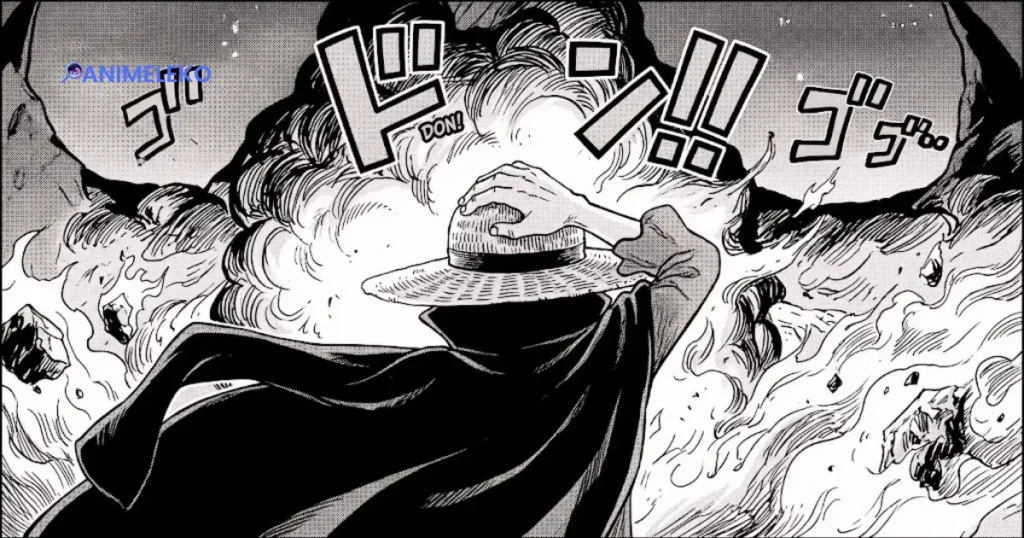
Watching One Piece for the first time is one thing. Going back through the story after learning more about its characters, history, and mysteries is a completely different experience. Suddenly, a scene you barely remembered can take on a new meaning, and a tiny detail in the background might be just as entertaining as the main action.
That is one of the things that makes Eiichiro Oda’s world so rewarding to explore. Not every interesting detail leads to a major revelation about the Void Century or the World Government. Sometimes, the details that stick with us aren’t the biggest revelations, but the little things we almost missed: a familiar face tucked away in a panel, a promise that stands the test of time, or a symbol that speaks louder than words ever could.
For this list, we’re looking at 12 hidden details in One Piece that are worth revisiting. Some are fun Easter eggs, others add emotional weight to important scenes, and a few connect to questions that fans are still trying to solve. The goal isn’t to turn every coincidence into a theory, but to explore what the story actually gives us and why these details deserve attention.
Spoiler warning: This article discusses events from several One Piece arcs, including Alabasta, Skypiea, Whole Cake Island, Wano, and Egghead.
1. Pandaman: The Mysterious Background Character Fans Love to Find
Have you ever paused a One Piece scene because something in the background caught your eye? If you’re the kind of fan who checks every corner of a manga panel, there’s a good chance you’ve come across Pandaman.
Recognizable by his panda head and human body, Pandaman is one of Oda’s recurring visual jokes. He isn’t a central character with an important role in the Straw Hats’ adventure. Instead, his appearances turn certain pages and scenes into little treasure hunts for observant fans.
That’s what makes him so entertaining. While Luffy and the crew are busy taking on tough enemies, getting out of trouble, or discovering the world’s biggest secrets, Pandaman could be lurking in the background, looking like he’s just another person going about his day. Finding him becomes a bonus for readers who enjoy looking beyond the obvious.
Not every detail in One Piece needs to explain the main plot to be memorable. Pandaman reminds us that Oda also enjoys having fun with his audience, rewarding people who pay attention to the artwork rather than focusing exclusively on the action.
There’s one catch, though: not every image of Pandaman circulating online comes from an official manga panel or anime scene. Fan edits and illustrations can easily be mistaken for genuine appearances, so checking the original source is worthwhile before adding a supposed cameo to your collection.
2. Usopp’s Lies Sometimes Sound Surprisingly Close to Reality
If there’s one Straw Hat who can turn an ordinary conversation into an unbelievable adventure, it’s Usopp. His stories tend to feature extraordinary enemies, impossible accomplishments, and situations that make him sound far more courageous than he feels.
But here’s where things get interesting: some of the things Usopp claims or imagines bear a resemblance to events that occur later in the series. For fans who enjoy revisiting old dialogue, those similarities can be difficult to ignore.
This has led many One Piece fans to wonder whether Usopp’s tall tales are just jokes or if some of them end up foreshadowing events that haven’t happened yet.
It’s an entertaining possibility, especially because it suits his character. Usopp wants to become a brave warrior of the sea, and his imagination often runs ahead of his actual abilities. Sometimes, the world seems to catch up with the stories he once told to impress other people.
Still, there’s a difference between an amusing parallel and confirmed foreshadowing. A line from an early chapter might seem to hint at something that happens much later, but that doesn’t necessarily mean Oda had every detail planned out from the start.
The best way to explore these connections is to compare Usopp’s exact words with what happens afterward. Some parallels may be genuinely compelling, while others become less convincing when examined closely.
Either way, his exaggerated stories are worth remembering. The next time Usopp starts boasting about something ridiculous, you might find yourself wondering whether the story is about to make him look foolish—or unexpectedly prove him right.
3. The X Marks on the Straw Hats’ Arms Made Vivi’s Farewell Unforgettable
The Alabasta farewell is one of those One Piece scenes that can hit just as hard on a rewatch as it did the first time. Vivi has fought alongside the Straw Hats to save her kingdom, but once the crisis is over, she faces a difficult decision: remain with her friends or return to her responsibilities as a princess.
She chooses her country, even though leaving the crew is clearly painful. And because the Straw Hats are wanted pirates, openly stopping to exchange a proper goodbye would put them at risk.
So the crew finds another way to communicate.
They raise their arms, revealing the X marks that Vivi can recognize. Without a speech or a final conversation, the Straw Hats show her that their friendship hasn’t disappeared simply because their journey together has come to an end.
The beauty of this moment lies in how much meaning Oda gives a simple visual. The mark had already been established as a way for Vivi to identify her companions, so its appearance during the farewell carries a message the characters don’t need to explain aloud.
It’s also a reminder that being part of the Straw Hats’ circle isn’t necessarily about physically sailing on the same ship. Vivi remains important to the crew, even though she stays behind in Alabasta.
When fans discuss hidden details in One Piece, this scene deserves a place on the list for a different reason than the usual mysteries. The X doesn’t reveal a secret civilization or predict a future twist. It captures an entire relationship in a single image, making the goodbye more powerful precisely because so little needs to be said.
4. Laboon and Brook Share a Promise That Time Couldn’t Erase
Laboon’s introduction at Reverse Mountain is easy to remember for its sheer strangeness: a gigantic whale repeatedly smashing his head against the Red Line. At first, the scene seems like an unusual obstacle standing between the Straw Hats and the Grand Line.
But the reason behind Laboon’s behavior turns the encounter into something much more emotional.
Long before Brook joined Luffy’s crew, he sailed with the Rumbar Pirates. During their journey, the pirates formed a bond with Laboon and left him in Crocus’s care, promising that they would return after completing their voyage.
That reunion never happened. The Rumbar Pirates were struck by tragedy, and Laboon was left waiting for companions who could no longer keep their word.
Knowing this history completely changes the way we see the whale at Reverse Mountain. His repeated attacks aren’t simply random acts of aggression. They reflect the frustration and grief of someone who has spent years waiting for a promise to be fulfilled.
Brook’s connection to Laboon gives the musician a personal goal that reaches far beyond his life with the Straw Hats. Reuniting with the whale means honoring the memory of his former companions and returning to a bond that began long before his current adventure.
What makes their story so moving is that both characters can carry their past with them without letting it stop them from moving forward. Laboon keeps the promise alive in his own way, while Brook carries the memory of his old crew wherever he goes.
It’s one of the series’ most touching reminders that an adventure can leave unfinished business behind—and that some promises remain important even after decades have passed.
5. Noland, Shandora, and the Golden Bell Reveal the Cost of a Forgotten History
Skypiea is packed with memorable moments, from the discovery of an island in the sky to the conflict with Enel. Yet one of its most meaningful stories revolves around a man whose reputation was destroyed because he couldn’t prove what he had seen.
Mont Blanc Noland was an explorer who discovered a golden city and returned home to tell others about it. When he went back to the location, however, the city was no longer where he expected it to be. His account was dismissed, and the story of Noland the liar became the version of events that survived.
The truth was more complicated. Part of Jaya had been sent into the sky, taking the land associated with Shandora with it. Centuries later, Luffy and his companions uncover the connection between the ruins, the people of Skypiea, and the civilization that Noland had tried to describe.
The golden bell becomes a powerful part of that revelation. Its sound connects the people separated by geography and history, helping bring recognition to a story that had been misunderstood for generations.
The important detail here isn’t simply that a city of gold existed. It’s that Noland’s reputation was shaped by circumstances he couldn’t control, while the truth survived long after the people who could explain it were gone.
That makes Skypiea more than an isolated adventure involving strange islands and powerful enemies. Its story explores how easily history can be distorted when evidence disappears, how injustice can last across generations, and why preserving the truth matters even when nobody believes it at first.
The bell’s significance comes from everything it represents: a lost civilization, an explorer whose name was unfairly condemned, and a connection between people who might otherwise have remained separated forever.
6. Sanji’s Family History Explains More Than Just His Last Name
Before Whole Cake Island, Sanji is already a familiar combination of contradictions. He’s an incredible cook, a skilled fighter who uses his legs in battle, and someone who sticks to his principles even when it costs him a chance to win.
His family history reveals just how much of that identity was shaped by his childhood.
Sanji is one of Vinsmoke Judge’s sons, born into a family that puts military strength above almost everything else and sees genetic modifications as a way to create more powerful soldiers. Rather than being accepted for who he was, Sanji was mistreated because he failed to meet his father’s expectations.
That background adds another layer to his devotion to cooking and his determination to help people who are hungry or vulnerable. Food isn’t merely his profession; it is closely tied to the values he chooses to live by.
What makes this even more interesting is how different he is from the rest of the Vinsmoke family. Judge and his family place enormous importance on strength, hierarchy, and effectiveness, while Sanji believes that compassion is worth protecting. His willingness to care for others isn’t a flaw he needs to overcome. It’s one of the qualities that defines him.
This doesn’t mean every earlier moment involving Sanji should be treated as a hidden clue to his ancestry. The more convincing reading is that Whole Cake Island gives us new context for traits that were already part of his character.
His family can explain where he came from, but it doesn’t determine who he becomes. In that sense, Sanji’s story is also about refusing to let the values of the people who hurt him decide what kind of person he will be.
7. Nico Robin and the Poneglyphs: Why the Truth About the Past Is Dangerous
The Void Century remains one of the biggest mysteries in One Piece, and the Poneglyphs are essential to uncovering what happened during that lost period of history.
These ancient stones preserve information that most people cannot read. Nico Robin’s ability to interpret their inscriptions makes her one of the few people capable of investigating a past that the World Government has worked to keep hidden.
That ability puts her in a very different position from an archaeologist simply studying an ancient civilization. Robin’s research can challenge the official version of world history, which makes her knowledge dangerous to the people who control it.
The tragedy of Ohara demonstrates the consequences. The island’s scholars were researching the ancient past when the World Government destroyed their home. Robin survived, but the persecution she experienced shaped her life and made the search for historical truth deeply personal.
The real secret isn’t only what the Poneglyphs contain. It’s why the act of reading them is treated as a threat in the first place.
Luffy and Robin are pursuing different dreams, but their goals fit together in an interesting way. Luffy wants the freedom to follow his own path, while Robin wants to discover the truth about the civilization that existed before the world they know. Both journeys challenge a system that tries to control people’s choices or limit what they are allowed to know.
As the Straw Hats continue their adventure, Robin’s research could reveal information that changes how the world’s people understand their own history. That’s why her role is so important: she isn’t merely helping the crew find its way through the Grand Line. She is pursuing answers that could challenge the foundations of the world itself.
8. Luffy’s Straw Hat Is a Symbol of the Promise That Started His Journey
The straw hat has become one of the most recognizable objects in anime, but its importance to Luffy goes far beyond its appearance.
When Shanks gives the hat to the young Luffy, he attaches it to a promise: Luffy must return it once he has become a great pirate. That simple exchange becomes a lasting connection between the boy who dreams of adventure and the pirate who inspires him.
As Luffy grows, the hat travels with him through battles, dangerous encounters, and the discovery of new islands. It serves as a reminder of where his dream began and of the commitment he made before setting out to conquer the seas.
Flashbacks also draw a visual parallel between the straw hat and Gol D. Roger, revealing that the future Pirate King wore one long before Luffy began his own adventure. That resemblance has encouraged fans to examine whether the object carries a deeper significance in the history of One Piece.
Here, though, it’s worth separating established facts from speculation. Luffy’s promise to Shanks is an explicit part of the story, while theories about the hat’s ultimate origin, its relationship to the Void Century, or its possible connections to other major figures require additional evidence.
The hat doesn’t need some hidden backstory to be meaningful. Its role in Luffy’s personal journey is already clear: it represents a promise, a friendship, and the dream that has guided him since childhood.
Whatever further revelations may come, those meanings remain at the heart of why Luffy protects the hat and why fans attach so much importance to it.
9. What Did Gol D. Roger Discover at Laugh Tale That Made Him Laugh?
Gol D. Roger’s arrival at Laugh Tale marked the end of a voyage that few pirates could even imagine completing. His crew had crossed the Grand Line, gathered information about the world’s hidden history, and finally reached the island at the end of their journey.
What happened when they arrived, however, was not the reaction many readers might have expected.
Roger and his crew laughed.
That moment has become one of the series’ most intriguing mysteries. After everything they’d been through on their legendary journey, what could they have found that made them react like that?
The story connects the crew’s discovery to Joy Boy and the hidden history of the world, but the exact explanation for Roger’s laughter has not been fully established. The distinction is important: knowing that the crew laughed is not the same as knowing precisely why.
Fans have suggested several possibilities. Perhaps the discovery contained an unexpected irony, revealed something about a promise that could not be fulfilled at the time, or presented Joy Boy’s legacy in a way that the crew found amusing. These ideas can lead to interesting discussions, but they remain theories unless the manga confirms them.
What makes the scene so memorable is the contrast between the scale of the achievement and the crew’s reaction. Reaching Laugh Tale was the culmination of an extraordinary adventure, yet the discovery produced laughter rather than the kind of solemn triumph people might associate with finding the world’s greatest treasure.
Whatever the truth turns out to be, it will have to explain both Roger’s crew’s reaction and what they discovered on their journey. Until then, the laughter remains a small but important piece of a much larger puzzle.
10. The Empty Throne Reveals a Contradiction at the Top of the World Government
The Empty Throne was presented as a symbol of equality among the world’s rulers. The symbol was meant to represent a world where no ruler could place themselves above everyone else or claim control over all nations.
The revelation of Imu changes the meaning of that symbol.
Despite the public image of a government without a supreme monarch, Imu occupies a position above the Five Elders and exercises authority from the shadows. This creates a sharp contradiction between the political ideal represented by the Empty Throne and the hidden power structure operating behind it.
The detail is especially effective because the throne communicates an idea before the audience understands how misleading that idea may be. Its meaning changes as new information emerges, turning a symbol of supposed equality into evidence of a system that conceals its true leadership.
This fits one of One Piece’s recurring themes: powerful institutions often present an official version of events that differs from the reality they want to keep hidden.
The Empty Throne is therefore important for more than its location or appearance. It represents the gap between what the World Government claims to stand for and how power is actually exercised.
Once Imu’s position becomes known, the throne can no longer be understood in quite the same way. What initially appears to be a symbol of shared authority becomes part of the mystery surrounding who truly controls the world.
11. How the Drums of Liberation Made Luffy’s Awakening So Memorable
Luffy’s awakening during the Wano arc changes the way we understand his Devil Fruit and introduces a deeper connection to Nika, the figure associated with liberation.
One of the defining elements of the transformation is the sound of the Drums of Liberation. Their rhythm gives the awakening a distinctive identity and connects the moment to the symbolism surrounding Nika.
That audio detail is worth noticing because One Piece doesn’t rely solely on dialogue to make important events memorable. Visual imagery, recurring symbols, and sound can all shape how an audience understands a major turning point.
The drums do more than make the scene feel dramatic. They are tied to the awakening and reinforce its association with liberation, giving the transformation an identity that extends beyond its combat abilities.
Still, it’s important not to turn every resemblance into proof of a hidden connection. The revelation about Nika gives readers new information about Luffy’s Devil Fruit, but it doesn’t automatically mean that every earlier reference to freedom or music was deliberately foreshadowing this specific event.
A careful reading focuses on the connections the story establishes and leaves room for questions that remain unanswered.
That approach makes the Drums of Liberation more interesting, not less. Their significance comes from the role they play in Luffy’s awakening and the meaning the story attaches to them, rather than from assumptions about every similar detail that came before.
12. The SBS Sections Contain Extra One Piece Details You Won’t Always Find in the Chapters
The main chapters aren’t the only place to discover information about One Piece. The SBS sections, included in the manga volumes, offer another way to learn about the characters, their habits, and details of the world that may not fit into the main narrative.
In these sections, Eiichiro Oda responds to questions from readers and shares additional information. Some answers clarify small points about characters, while others provide background details or explanations that add another dimension to the story.
Fans who love exploring the finer details of One Piece can find plenty of interesting discoveries in the SBS sections. A character’s behavior or a small element of the world might receive more attention there than it does during the main adventure.
But there’s one habit worth developing before sharing trivia online: check the original answer whenever possible. As details spread across fan pages, it’s easy for them to get taken out of context. Some lists also blur the line between what Oda has officially confirmed, what fans believe, and what has no reliable source behind it.
Distinguishing what Oda explicitly confirms from what fans infer makes discussions much more reliable. It also prevents an interesting theory from being repeated as if it were established canon.
The SBS sections are a reminder that exploring One Piece doesn’t have to stop when a chapter ends. Alongside the major revelations and dramatic battles, the series contains a wealth of smaller information that helps flesh out its characters and setting.
For readers who want to catch details they may have missed, those extra pages are well worth exploring.
What Do These 12 Hidden Details Tell Us About One Piece?
Part of the fun of following One Piece is realizing that the story offers more than a succession of battles and new opponents for Luffy to face. One Piece becomes even more fascinating when you start connecting the dots between different moments, exploring how a character’s past shapes their actions, and noticing how a small detail can give an entire scene a completely different meaning.
Pandaman represents Oda’s playful side, while the X marks in Alabasta show how a simple image can communicate a farewell that words cannot. Laboon and Brook demonstrate the lasting power of a promise, and Noland’s story explores what happens when history is remembered incorrectly. Sanji’s past, meanwhile, gives additional context to the values that define him.
Other details lead toward bigger questions. Robin’s search for the truth connects the Straw Hats’ journey to the Void Century, Roger’s laughter keeps the mystery of Laugh Tale alive, and Imu’s existence challenges the World Government’s public image. Luffy’s straw hat and the Drums of Liberation also show how symbols can gain meaning as the story unfolds.
These examples aren’t all secrets in the same sense. Some are established parts of the story, others are Easter eggs, and a few remain open questions that invite theories. Recognizing that difference helps us appreciate what makes each one interesting without claiming that every detail hides a major revelation.
And that’s what makes revisiting One Piece so rewarding. Sometimes a second look reveals a connection you missed. Sometimes it gives a familiar character a new layer of meaning. And sometimes it leaves you with another question to discuss while waiting for the next big reveal.
Which hidden detail in One Piece caught your attention the most? Tell us in the comments. It might be a background cameo, a line of dialogue, or a connection between two arcs that completely changed how you see the story.
Cover image: One Piece © Eiichiro Oda / Shueisha