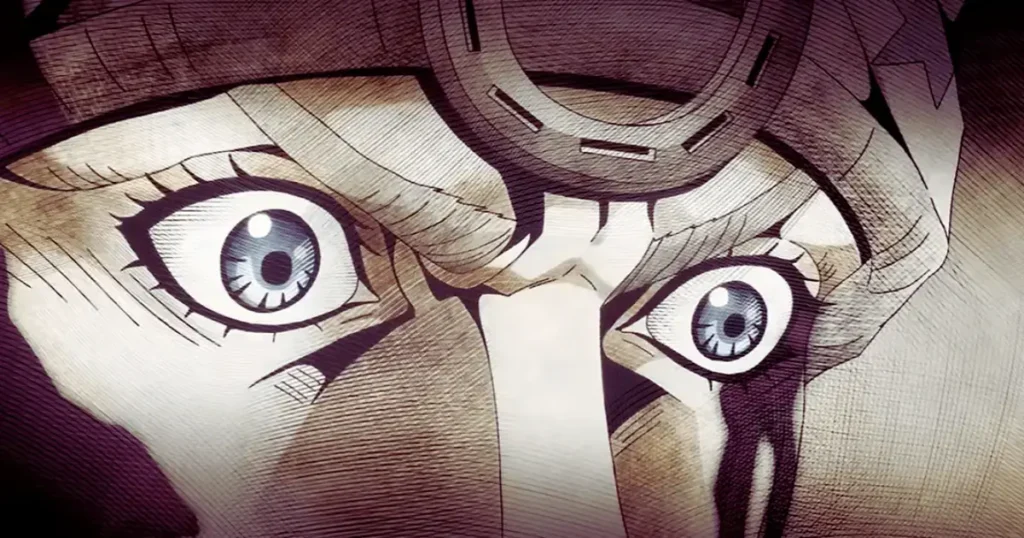
Anyone who’s watched the first episode of Steel Ball Run knows the number that kicks off the whole race: $50 million to whoever crosses the finish line first. That’s an absurd amount of money for 1890, more than enough reason for thousands of riders to risk their lives crossing the entire United States on horseback.
But if you actually pay attention to what’s happening behind the scenes of the race — especially to what Funny Valentine is doing while pretending to just be its sponsor — you’ll notice something: the real prize of Steel Ball Run was never the money. It was just the perfect cover story to hide something way bigger, right under everyone’s nose, including the racers themselves.
With the 2nd Stage now airing on Netflix and the race entering the point where this theory basically becomes confirmed, this is the right time to lay the whole thing out.
The Prize Everyone Sees
On the surface, Steel Ball Run is exactly what it looks like: a brutal endurance race, hundreds of competitors, checkpoints scattered across the United States, and a cash prize for whoever finishes near the top. It’s the perfect hook to pull in people who are desperate, ambitious, or just too talented to ignore — Johnny Joestar, Gyro Zeppeli, Diego Brando, Sandman, Mountain Tim, the whole roster of charismatic characters the race brings together exists precisely because the cash prize is big enough to justify any risk.
And that’s exactly why it works so well as a cover. Nobody questions why an event this massive exists when the obvious answer — “there’s a ton of money on the line” — already satisfies most people’s curiosity.
The Clue That’s Not on the Official Map
Spoiler warning: from here on, this analysis gets into elements from the 2nd and 3rd Stage of the race, including reveals about Funny Valentine’s actual goal.
The real reason Steel Ball Run exists comes down to a map — the map of Joseph of Arimathea, the man who, according to legend, took Jesus Christ’s body down from the cross. That map doesn’t point to any kind of cash treasure — it points to the location of pieces of a sacred body, scattered along the exact route the race travels.
Funny Valentine, president of the United States, finds this out before any of the racers do, and deliberately draws Steel Ball Run’s route directly over those coordinates. He isn’t spending $50 million to find out who America’s fastest rider is. He’s using hundreds of people as a disposable search party, each one covering a stretch of land looking for something he’d never be able to search for on his own.
That completely changes what the race actually represents. It’s not a test of speed. It’s an excavation dressed up as a sporting event.
What’s Actually Hidden Along the Route
The pieces of the Corpse Parts aren’t just decorative relics — each one grants a supernatural power to whoever holds it, usually in the form of a Stand. That’s why, as the race goes on, racers who stumble onto these pieces by accident start manifesting abilities nobody else has.
| Character | What they think they’re competing for | What’s actually at stake |
|---|---|---|
| Everyday racers | $50 million in cash | Unknowingly serving as Valentine’s search force |
| Funny Valentine | Prestige as the event’s sponsor | Assembling the complete Corpse Parts and gaining near-absolute power |
| Diego Brando | Winning the race for pride and the prize money | A piece of the body that grants him an extremely powerful Stand |
| Johnny Joestar | At first, just the money, to rebuild his life | Walking again — and, eventually, transforming as a person |
Why This Structure Isn’t an Accident
This is the kind of setup that only makes sense once you remember Hirohiko Araki isn’t the type of author who goes for obvious prizes. Almost every part of JoJo’s Bizarre Adventure runs on that same idea: the stated goal is never what actually matters — what matters is the transformation the character goes through while chasing it.
Johnny Joestar enters the race broken, purposeless, and fixated purely on earning enough money to disappear from his own life. But here’s the genuinely interesting part: the sacred body literally makes contact with him right at the start — the arm piece fuses to his own arm before he even knows what it is — almost like the story is quietly telling us that the real prize of this whole thing was always Johnny rebuilding himself, not the check at the end.
Gyro Zeppeli reinforces this reading constantly. The Spin philosophy he carries, summed up in that repeated idea of “always keep moving forward,” has nothing to do with money — it’s about meaning, about finding a reason to race that isn’t just the cash prize. He’s basically the voice of this entire theory, built right into the story itself.
How This Changes the Way You Watch the Race
If you’re following the 2nd Stage right now, it’s worth swapping out the question guiding your viewing experience. Instead of “who’s going to win the $50 million,” the real question is: who’s going to realize, before everyone else, that the money was never the actual goal — and what each character does once they figure that out.
That shift in perspective is what separates people who watch Steel Ball Run purely for the action (which is already excellent, to be fair) from people who understand why this is considered one of the best-constructed sagas in the entire franchise. The real prize was never at the finish line. It was scattered along the entire route, waiting to be found by whoever was paying close enough attention.
Enjoyed this theory? AnimeLeko’s full Steel Ball Run coverage continues with our definitive guide to the race, plus more analyses as new episodes drop on Netflix.