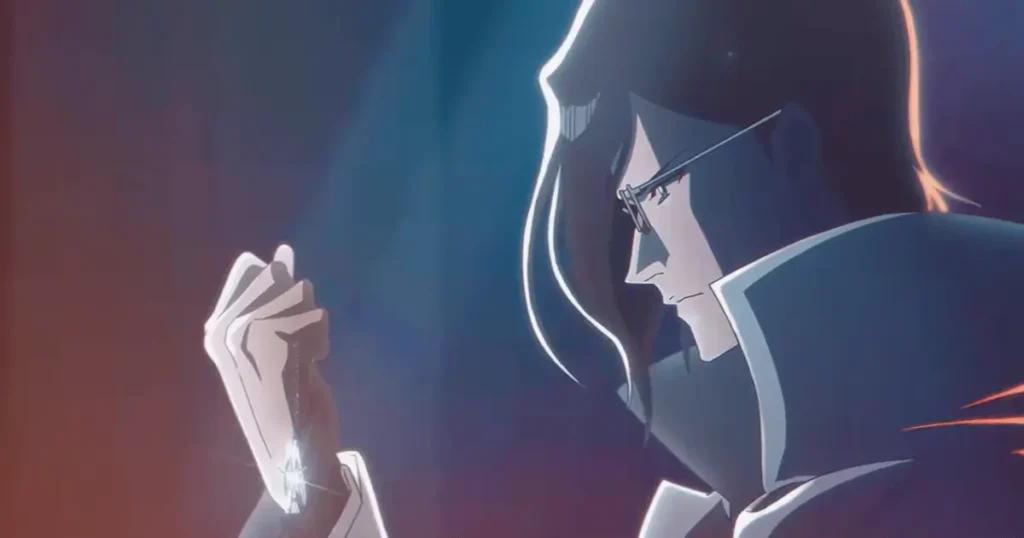
Few scenes in Bleach carry as much emotional weight as watching Uryū Ishida — the same archer who’s fought alongside Ichigo Kurosaki since the very first episodes of the series — standing there, literally blocking his friend’s path. The question that image immediately raises is: did Uryū Ishida betray Ichigo? The short answer is that the situation is way more complicated than a simple yes or no. Uryū never stopped caring about Ichigo, and he didn’t blindly buy into Yhwach’s ideology either — he’s caught in the middle of a much older web, one involving the Quincy people, the Ishida family itself, and a personal debt that goes back long before the current war. This article breaks that apparent betrayal down piece by piece, from what Ichigo actually sees in that scene to Uryū’s real goal behind all of it.
Did Uryū Ishida Really Betray Ichigo?
From Ichigo’s point of view, the scene doesn’t leave much room for another read in the moment: he moves to stop Yhwach from reaching the Soul King’s Palace, and it’s Uryū, of all people, who steps into his way, letting the Quincy leader move forward. This isn’t some distant misunderstanding — it’s a direct, physical confrontation between the two of them. The show’s official synopsis describes exactly this scene: Uryū deliberately positioning himself between Ichigo and Yhwach’s advance.
It’s that contrast — between the image Ichigo sees (a friend now standing with the enemy) and the far more complicated reality behind it — that drives all the tension in this part of the story. On the surface, Uryū Ishida is against Ichigo in that scene — but “against” doesn’t automatically mean “traitor” in the way Ichigo, and a lot of the audience, assumes at first glance.
Why Is Ichigo So Shocked by This?
Because this isn’t just some random rivalry. Uryū and Ichigo build a genuine friendship over the course of the entire series — they’ve fought side by side against common enemies, faced danger together in Hueco Mundo, and developed a mutual respect that spans years of history. Watching this exact person, out of everyone, physically stand against him at the most critical moment of the war is a shock that goes way beyond battle strategy — it’s personal, and the story leans into that emotional weight on purpose.
Why Did Uryū Join Yhwach?
This is the core of everything: Uryū didn’t join Yhwach because he admired his plan for world domination, or because he agreed with his worldview. His alliance comes from a personal discovery about the Ishida family’s own history and about the Quincy as a people — something he only fully came to understand after digging into a past his father had kept hidden. The show’s official material describes exactly this process: Uryū uncovers the truth behind everything and reaches his own conclusion before Yhwach even formally names him as his successor.
That order matters: Uryū wasn’t talked into it by Yhwach’s speeches. He investigated on his own, found the missing pieces himself, and only after that did Yhwach’s offer start to fit into a plan that was already taking shape in Uryū’s own head.
What Did Uryū Discover About the Quincy?
To understand why Uryū joined Yhwach, you have to go back to the Quincy people’s own history — a community that spent centuries being hunted and nearly wiped out in conflicts with the Shinigami. Uryū grew up hearing fragments of that history from his grandfather, Sōken Ishida, but a lot of it stayed hidden because his father, Ryūken, deliberately kept it from him. It was only by digging through records and confronting Ryūken directly that Uryū got the full picture — including Yhwach’s role as the origin point of every Quincy, and the real extent of what happened to his own family.
This backstory is exactly what turns Uryū’s decision from an “impulsive choice” into a “response to a history of persecution that was always closer to him than he realized.”
What Happened to Uryū’s Mother?
Who Was Kanae Katagiri?
Kanae started out as a servant for the Ishida family before marrying Ryūken Ishida and becoming Uryū’s mother. She was a Quincy Gemischt — a term used within the Quincy’s own bloodline hierarchy to describe someone of mixed ancestry, as opposed to the Echt, considered “pure-blooded.” That distinction, which seems like a simple genealogical detail at first, ends up being what decides her fate.
How Did the Auswählen Affect the Ishida Family?
The Auswählen is an event triggered by Yhwach that strips the powers from Quincy he considers “impure” or “useless” by his own standards — hitting mixed-blood Quincy like Kanae the hardest. On the exact same day Masaki Kurosaki, Ichigo’s mother, lost her powers and died in direct combat against a Hollow, Kanae also lost consciousness as a result of that same event — surviving another three months before passing away. Years later, Ryūken keeps the silver clot the Auswählen left in her heart and forges it into an arrowhead, holding onto that weapon for years, waiting for the right moment to use it against Yhwach.
Why Does His Mother’s Death Shape Uryū?
It’s worth pointing out that boiling everything down to Kanae’s death would be oversimplifying a character the story builds with way more layers than that. Losing his mother is, yes, a real and deep wound — but it works as part of a bigger picture tied to the Quincy’s historical persecution as a people, not as the single isolated reason behind every choice Uryū makes going forward.
Why Did Yhwach Choose Uryū as His Successor?
Being named Yhwach’s successor isn’t just a symbolic title — it’s the promise of eventually inheriting the most powerful position among the Quincy. And the choice wasn’t random: the show itself reveals that Yhwach had already been watching Uryū since the Auswählen that killed his mother, years before the two of them ever made direct contact. That suggests Uryū was always part of Yhwach’s calculations, long before the current war even started.
That said, this choice is far from universally accepted inside the Wandenreich. Jugram Haschwalth, Yhwach’s right hand for a very long time, openly distrusts Uryū’s new position — and the official synopsis itself confirms this appointment creates real controversy within the Quincy hierarchy. A newcomer getting successor status over someone who’s served Yhwach for decades is exactly the kind of decision that naturally breeds tension and internal rivalry.
Is Uryū Really on Yhwach’s Side?
This is the question that separates “appearing loyal” from “actually sharing the same goals” — and that’s exactly where the real complexity of Uryū’s position lives. He plays his role inside the Wandenreich, accepts the successor title, and even drinks Yhwach’s own blood to receive his Schrift — but none of that, on its own, confirms that he agrees with Yhwach’s plan for domination.
What the story carefully builds is a character who keeps his true intentions hidden, even from close allies. Haschwalth distrusts him on instinct; Yhwach seems to trust him enough to elevate him to successor, but without handing over full control; and Uryū himself holds onto information and motives that nobody inside the Wandenreich fully knows. It’s an incredibly high-risk position: one wrong move, and the entire facade collapses before the right moment arrives.
Why Did Uryū Attack Ichigo?
The central scene behind this whole discussion happens when Ichigo tries to stop Yhwach’s advance toward the Soul King’s Palace, and Uryū plants himself directly in his path. The confrontation becomes unavoidable — not because Uryū wants to hurt his friend, but because, at that exact moment, he has to hold his position within the larger plan he’s secretly carrying out. The official presentation of the story leans into this contrast of purpose: while the fight plays out in the present, memories of Ichigo and Uryū fighting side by side are woven into the scene, driving home just how much this moment weighs on both of them emotionally.
Ichigo, without access to all the context the audience is slowly piecing together, reacts exactly how anyone would: with shock, anger, and the genuine feeling of being betrayed by someone he trusted.
What Is Uryū’s Antithesis?
How Does Antithesis Work?
After receiving Yhwach’s blood as his confirmed successor, Uryū gains access to Schrift “A” — the Antithesis. In simple terms, Antithesis lets him reverse something that’s already happened between two targets: damage taken, position, or the outcome of a specific action can be flipped and redirected between the two parties involved.
In practice, if Uryū takes a hit in battle, he can reverse that outcome, sending the damage back onto whoever caused it — or even heal himself while punishing his opponent with the exact injury he would’ve taken. The power also works in other kinds of exchanges between two points, not just direct physical damage.
Why Is This Power So Dangerous?
Because it doesn’t rely on raw strength to be effective. An opponent can be completely dominating a fight and then, in an instant, watch their own advantage get turned right back on them. That’s what makes Antithesis so treacherous: fighting Uryū means constantly risking that any progress you’ve made gets reversed without warning.
Can Antithesis Take On the Almighty?
According to the Wandenreich’s own internal hierarchy, yes — at least in theory. Haschwalth himself considers Uryū’s power a real potential threat to Yhwach’s Almighty, something we already broke down in depth in our article on what Yhwach can actually do in Part 4 and the true power of the Almighty. Still, it’s worth being careful here: Haschwalth’s assessment shouldn’t automatically get turned into “Antithesis effortlessly beats the Almighty.” It’s a threat the story itself acknowledges, not a guaranteed win — fact first, interpretation second.
Can Uryū Defeat Yhwach?
Why Is Antithesis a Threat to Yhwach?
Because Yhwach’s Almighty works by rewriting the future in his favor — while Uryū’s Antithesis works by reversing events that have already happened. These are two powers operating in conceptually opposite directions, which is exactly why the Wandenreich’s own command structure sees Uryū as a genuine risk, even while he’s nominally on Yhwach’s side.
What’s the Relationship Between Antithesis and Almighty?
Both carry the letter “A” as their Schrift designation — a symbolic detail that reinforces the idea that the two powers were, in some way, designed as counterpoints to each other within the power system Yhwach established.
Is Uryū’s Power Really a Perfect Counter?
Not necessarily. Acknowledging that Antithesis has the theoretical potential to challenge the Almighty is different from claiming it guarantees Yhwach’s defeat on its own. The true weight of this ability only fully reveals itself in the war’s final confrontation — and even then, it works as part of a bigger strategy, not as a standalone solution.
Uryū and Ichigo: Friends or Rivals?
The honest answer is: both, depending on the point in the story. From their very first meeting — marked by open rivalry, with Uryū even being the first human to discover Ichigo had Shinigami powers — the two characters build a relationship that evolves from competition into genuine partnership across entire arcs: fighting common enemies, risking their lives together in Hueco Mundo, and developing a mutual respect that survives years of parallel conflicts.
It’s exactly that years-long foundation that gives real weight to the break during the Thousand-Year Blood War. A confrontation between two strangers would just be another fight; a confrontation between Uryū and Ichigo carries the full history of everything they’ve already been through together.
Will Uryū Fight Ichigo in Part 4?
It’s important to clearly separate what’s already confirmed by the manga from what’s still being adapted by the anime, and from what’s still just expectation for Part 4. Uryū’s position inside the Wandenreich, his direct connection to Yhwach as his successor, and the physical confrontation we’ve already seen with Ichigo lay the emotional groundwork for the war’s final clashes. What’s left to watch play out on screen is exactly how this tension resolves during the climax — whether the two end up fighting side by side again, and how Uryū’s true goal finally comes to light for Ichigo and the rest of the cast.
What Does Uryū’s Betrayal Mean for Bleach’s Ending?
Reducing Uryū’s arc to “he pretended to be a villain and then turned back into a hero” completely ignores what makes this arc so well put together. Uryū occupies a position no other character in the series holds: he’s Quincy by blood, a genuine friend of Ichigo’s through years of shared history, and at the same time a formal piece of the army threatening everything Ichigo is trying to protect. He didn’t pick a side in any simple way — he’s navigating, at enormous personal risk, between a heritage he never chose and a friendship he never stopped valuing.
It’s this uncomfortable, in-between position, carefully built across the entire saga, that makes Uryū Ishida one of the most important pieces for understanding Bleach TYBW’s true ending — way beyond any simple answer about betrayal.
In your opinion, did Uryū always intend to help Ichigo from the start, or did he only decide that as events unfolded? Drop your read on Uryū’s true goal in the comments.